AI PRODUCT · SIDE PROJECT · ONGOING
Built by accident, carried forward by curiosity. An AI-powered dream companion that helps people understand the third of their life that fizzles away as soon as they wake up.
Join the waitlist[ THE ORIGIN ]
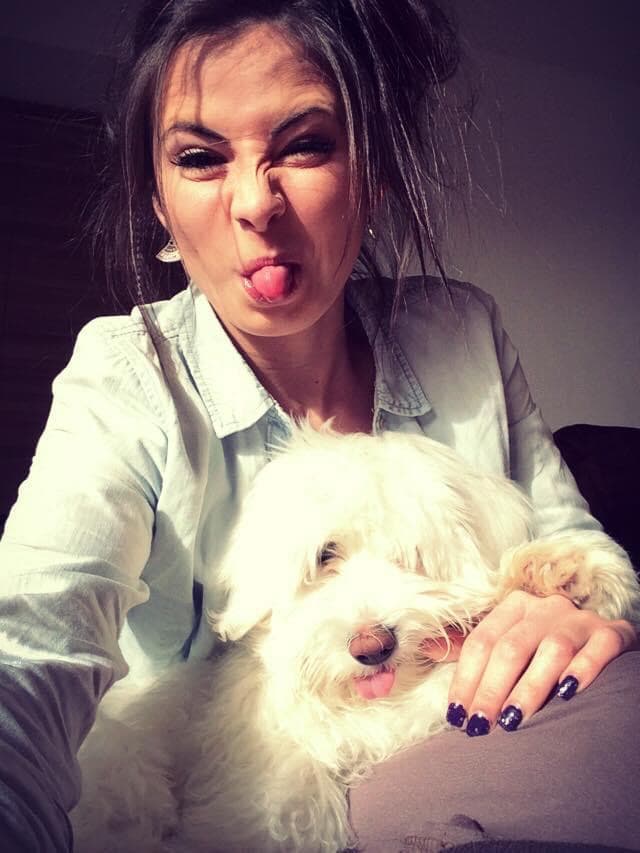
In October last year, I had to say goodbye to my dog, Bengie.
In the nights that followed I started having vivid, lucid dreams. I'd wake up in the early hours, emotional, a little lost, the dream already dissolving at the edges. So I did something instinctive. I picked up my phone and voice recorded before it disappeared. Then I asked AI to interpret it.
This happened again. And again. And I started to notice something. I was understanding myself better. Processing things I hadn't consciously sat with. Seeing patterns across nights, across weeks. The dreams were doing something and capturing them was making it visible.
I didn't realise it at the time, but I was in my own MVP stage.
[ THE INSIGHT ]
We spend a third of our lives asleep. And we understand almost nothing about what happens during that third.
There's no real tool for it. No companion that sits with you, catches what you experienced and helps you make sense of it over time. Dream journals exist but they're passive. A notebook doesn't recognise patterns. It doesn't reflect anything back to you. It just holds what you give it.
I thought: this can't just be me.
So I went down the rabbit hole. Started asking people about their dreams. Turns out almost everyone has them and almost no one has a good way to document, understand or revisit them. That gap became Dreamcatcher.
[ WHAT IT IS ]
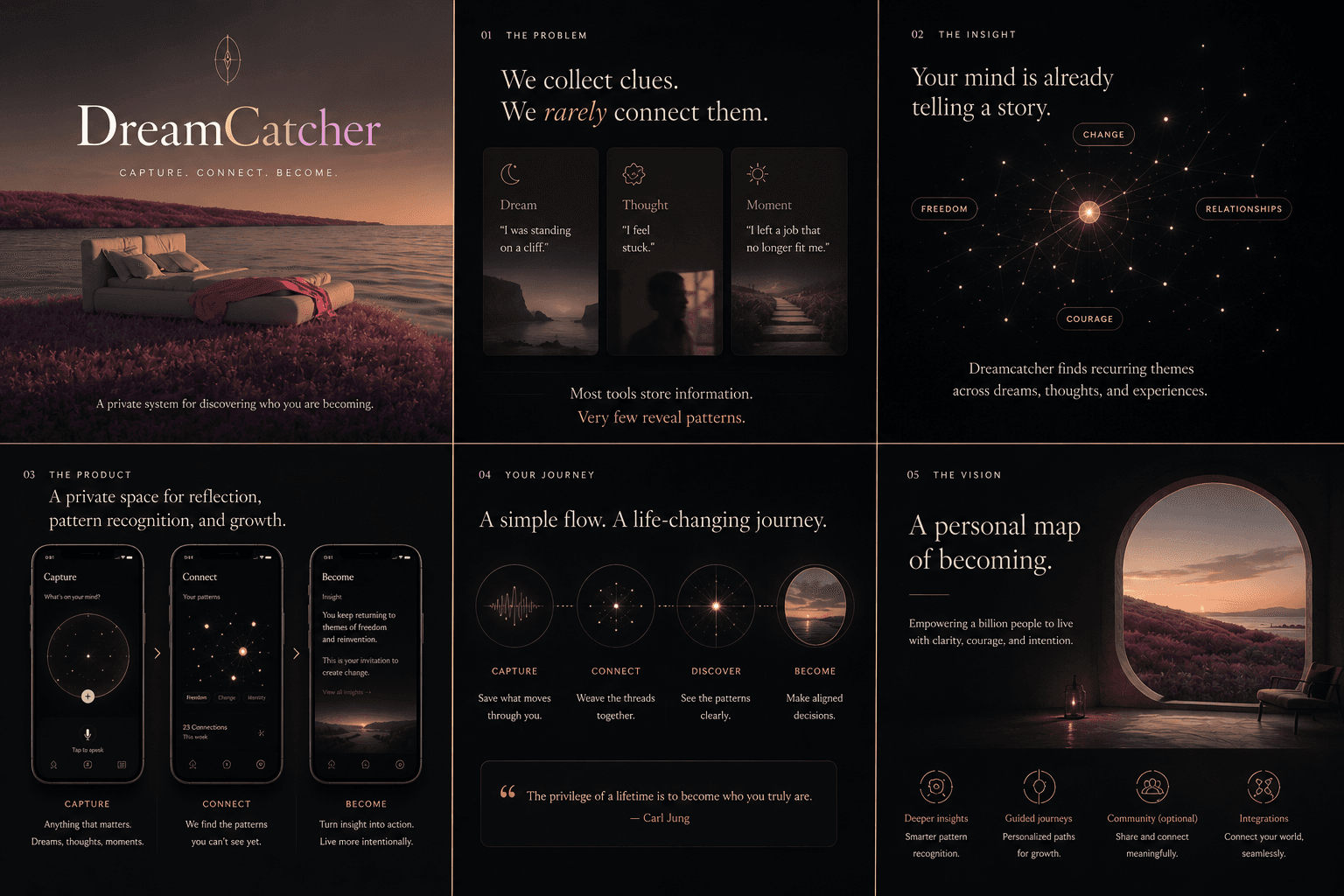
Dreamcatcher is a journal and a companion. You record your dream by voice, as muffled and all over the place as it comes out naturally whenever you wake up. The app interprets it. Makes it visual. And over time it recognises patterns across your dreams, reflecting back things about yourself that you might not have consciously noticed.
Think of it as the tool that helps you understand the third of your life you've been ignoring.
Today it records, interprets and visualises dreams. Pattern recognition builds over time.
Next comes a community feed. Anonymous dreams shared and scrolled. The realisation that other people's inner worlds aren't as different from yours as you thought. Later comes dream matching. Connecting strangers whose dreams share something. Proving a hypothesis I've been sitting with since the beginning: we are far more connected than we think.

[ WHAT I'VE ACTUALLY BUILT ]
This is not a concept. It is a working product I am building with my own hands.
Every screen built in Codex. Local user testing on my own device via Xcode. I have worked across Stitch, Gemini, 21st.dev and Claude to understand what each tool does well and where the seams show. I use Wispr Flow for voice input research and understand intimately why the capture of your dream experience has to be frictionless or it fails entirely.
I have gone deep on engineering prompts. Getting AI to generate the right code consistently is a craft in itself. I have broken things, fixed things, pushed to the wrong branch, exposed an API key and learned every one of those lessons the hard way.
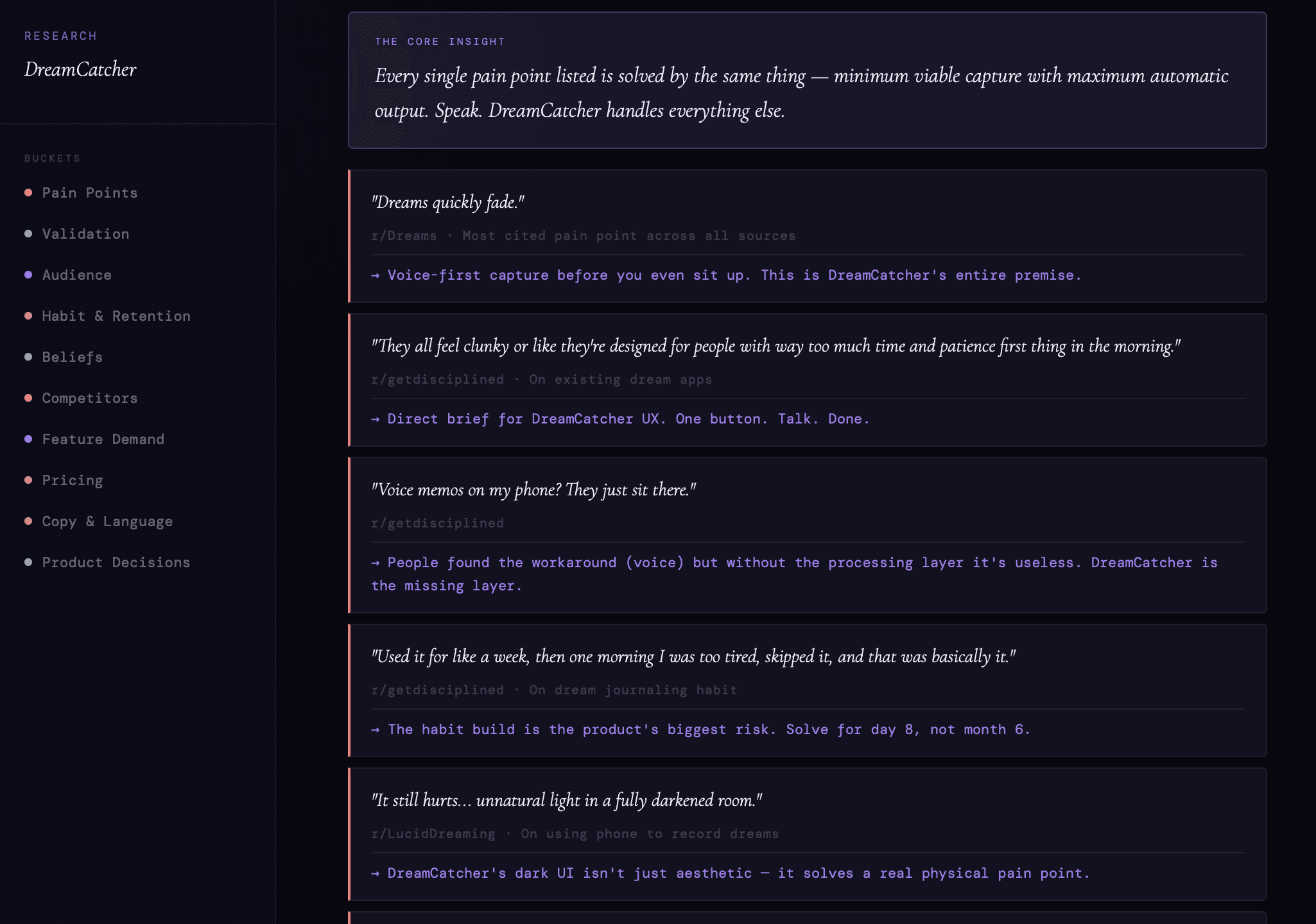
I built a waitlist using Kit. I run structured user interviews through Typeform and Tally, speaking to real people weekly about their dreams, their habits and what would make them trust an app with something this personal. I have a roadmap in Linear and have done gap analysis across the full product surface.
[ THE HARD BITS NOBODY TALKS ABOUT ]
Building a product that captures personal dreams is not just a technical challenge. It is a responsibility.
I have studied GDPR carefully because I am storing sensitive personal data. Thoughts, feelings, subconscious experiences. That requires understanding not just where data lives but how it is protected, what users are consenting to and what my obligations are as the person holding it.
I have read Apple's App Store Review Guidelines properly, not skimmed them. The mental health and wellbeing categories and the privacy requirements are more involved than most solo builders expect. Apps that touch emotional or psychological territory get extra scrutiny. I am building to those standards before submission, not scrambling to fix it after rejection.
[ BUILDING ALONE ]
The hardest part of building Dreamcatcher isn't the code or the design or the distribution. It's the absence of collaboration.
Not having someone to bounce ideas off. To emotionally test a decision with as much as technically sense-check it. AI is a wonderful tool. Genuinely. But it isn't the same as building something with a human who cares about it as much as you do.
There are moments of pure flow where hours disappear, something clicks and the product moves forward in ways that feel almost magical. Those moments are real.
But the best work I've done in my career has always been with people. Laughing at the hard bits. Carrying each other through the frustrating ones. Building something that matters with a group of people who've decided it matters together. Dreamcatcher has taught me that I don't just want to build. I want to build with.
[ WHY IT'S ON THIS WEBSITE ]
Because it's evidence of something a CV can't show. Curiosity that doesn't clock off. A product instinct applied to a personal problem. The willingness to be a beginner, publicly, repeatedly, in a space that's genuinely new.
Every product decision I've made on Dreamcatcher has been customer-led, even when the customer is me. For now. That's not a side project. That's how I think. All the time. About everything.
[ THE HYPOTHESIS ]
We spend a third of our lives in a place none of us can fully explain. And in that place, in those strange, vivid, dissolving experiences, we might be more alike than we realise.
Dreamcatcher started with grief and a voice note. It's becoming something I think could matter to a lot of people. Nowhere near done.